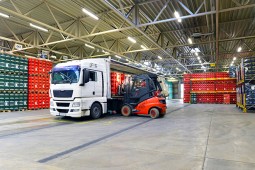
Cross Stuffing Dubai: Container Transloading at Jebel Ali
Last updated: April 2026
Cross stuffing in Dubai is the process of unloading freight from incoming containers and reloading it into outgoing containers — with re-sorting, repackaging, or consolidation as required. For trading companies, freight forwarders, FZE entities, and regional distributors using Dubai as a commercial transhipment hub, this service eliminates the need to import goods into the UAE market before re-exporting. Delta Global Cargo provides cross stuffing services across Dubai’s bonded free zones, through our partner agents’ licensed bonded facilities, with fast turnaround times, and full UAE Customs compliance.Cross Stuffing Dubai: Process and Services
What Is Cross Stuffing and Why Does It Matter for Your Business?
Cross stuffing in Dubai is the process of unloading freight from one or more incoming shipping containers and reloading it into a different outbound container — typically to consolidate shipments from multiple suppliers, split a large consignment into smaller ones, or switch container types before re-export.
For trading companies, importers, and exporters that source goods from multiple origins, cross stuffing is one of the most practical and cost-effective logistics tools available. Instead of forwarding three or four partially-loaded containers from different suppliers to a single buyer, you consolidate everything in Dubai and ship one full container — cutting freight costs dramatically.
At Delta Global Cargo, we handle cross stuffing operations daily at Jebel Ali Port and across our Dubai warehousing facilities. This guide covers how the process works, what it costs, how long it takes, and what makes Dubai the world’s best location for container consolidation.
Why Dubai Is the World’s Best Location for Cross Stuffing
Dubai — and specifically Jebel Ali — has become the go-to hub for container consolidation across the Middle East, Africa, Central Asia, and the Indian Subcontinent for several concrete reasons.
Strategic Geographic Position
Dubai sits at the crossroads of Asia, Europe, Africa, and the Americas. Freight arriving from China, India, Turkey, or Europe can be efficiently received, consolidated, and re-exported to East Africa, West Africa, Afghanistan, Central Asia, or any other market within competitive transit times. No other port in the region offers the same combination of connectivity and speed.
Jebel Ali Port Infrastructure
Jebel Ali is the largest container port in the Middle East and consistently ranks in the world’s top 10 by volume, handling over 15 million TEUs per year. Its facilities include deep-water berths for ultra-large container vessels, advanced crane technology, automated container handling, and dedicated transshipment terminals — all of which make large-scale cross stuffing operations fast and reliable.
Jebel Ali Free Zone (JAFZA) Duty Advantages
Goods processed within the Jebel Ali Free Zone can be stored, consolidated, and re-exported without attracting UAE import duties. This is a significant financial advantage for companies using Dubai purely as a transit hub. If your goods never enter the UAE domestic market, you avoid import VAT and customs duties — saving typically 5% of freight value on re-exports.
Multimodal Connectivity
From Jebel Ali, consolidated freight can move onward by sea to over 180 ports worldwide, by road to Saudi Arabia, Oman, and GCC countries. This makes Dubai one of the only cities in the world where cross stuffed freight can reach almost any global destination within 1–21 days depending on the mode.
Types of Cross Stuffing Services in Dubai
FCL to FCL Consolidation
Multiple full containers arriving from different origins are unloaded and reloaded into a smaller number of outbound containers. This is the most common type, used when a buyer imports from several suppliers across different countries.
LCL to FCL Groupage Consolidation
Multiple less-than-container-load (LCL) shipments from different shippers are grouped into a single full container load (FCL) for a shared destination, significantly reducing per-unit freight costs.
Container Type Switching
Freight sometimes needs to move from a 20ft to a 40ft, from a standard dry to a high cube, or from general goods to a refrigerated reefer container. Cross stuffing handles this switch efficiently before the onward voyage.
Damaged Container Transfer
If a container arrives damaged or structurally compromised, freight is cross stuffed into a new container to protect goods and maintain insurance validity for the onward leg.
Dangerous Goods Segregation
IMO-classified hazardous materials must be segregated from incompatible freight. Cross stuffing allows shippers to reorganise hazardous loads in compliance with IMDG regulations before vessel loading.
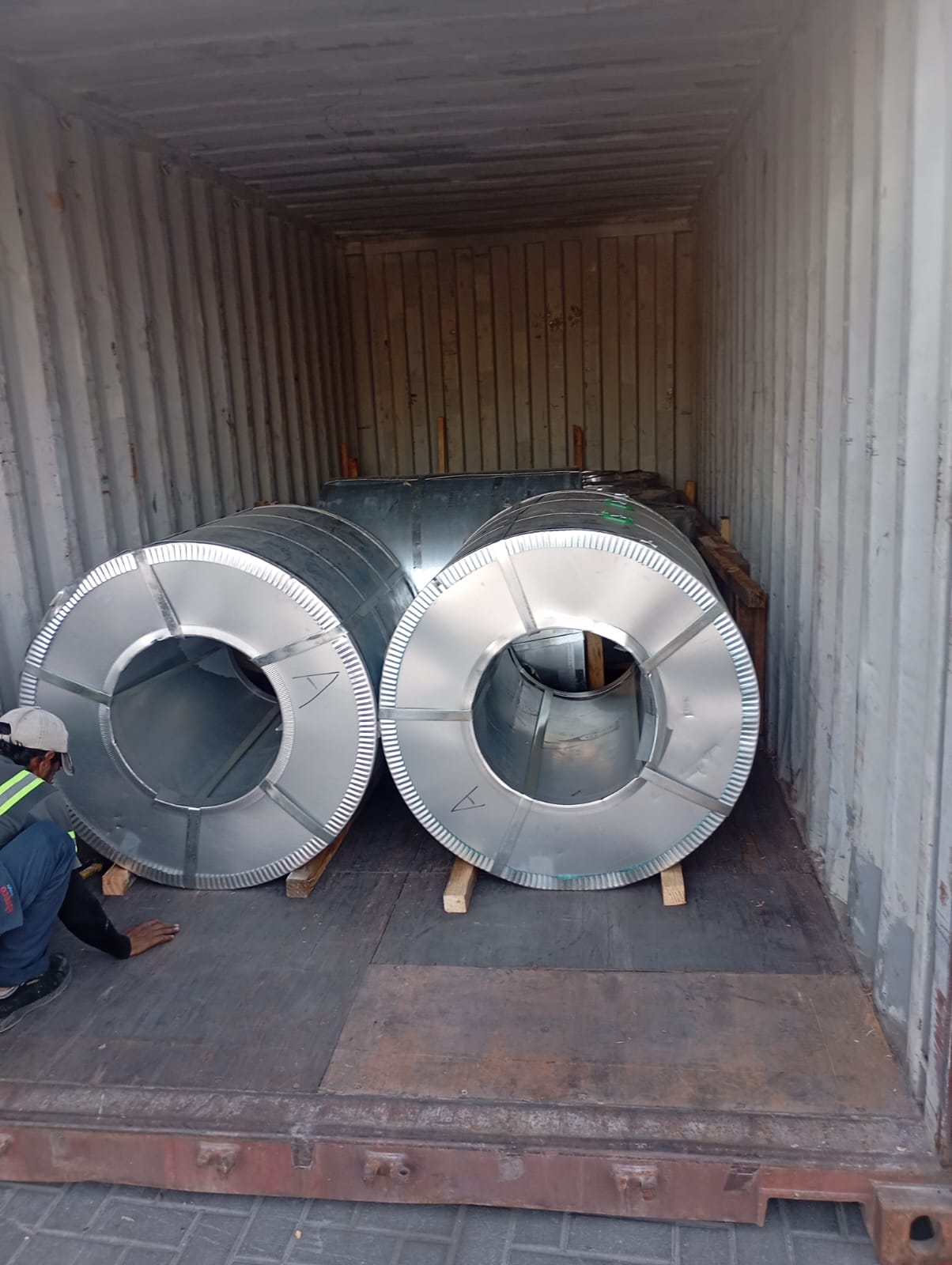
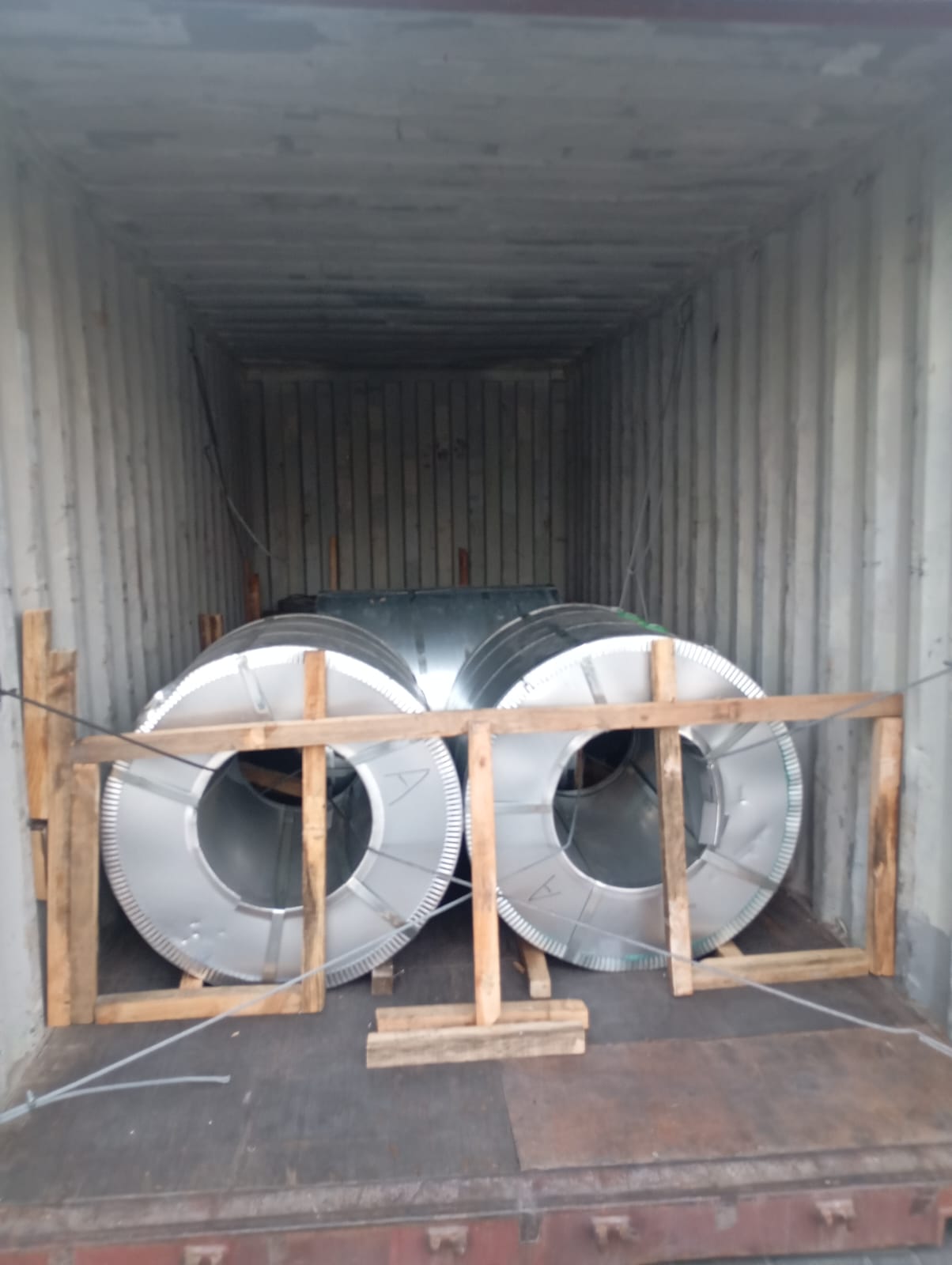
Cross stuffing operation in Dubai — steel coils transferred between two 20GP containers by Delta Global Cargo.
Step-by-Step: How Cross Stuffing Works at Delta Global Cargo
- Freight Arrival and Documentation Check: Inbound containers arrive at Jebel Ali Port or our partner agent’s bonded warehouse. Our team verifies the bill of lading, packing list, and commercial invoice against physical freight before unloading.
- Customs Status Confirmation: We confirm whether freight is bonded (in-transit, no duty) or cleared. For re-export freight processed within JAFZA, no import duty applies.
- Container Unloading and Freight Inspection: Each carton, pallet, or unit is counted and inspected for damage. A condition report is issued before any reloading begins.
- Sorting and Segregation: Freight is organised by destination, consignee, or commodity type. Hazardous goods are handled by our certified dangerous goods team.
- Reloading into Export Container: Freight is loaded into the designated outbound container with an optimised load plan to maximise utilisation and meet vessel weight limits.
- New Shipping Documentation: We prepare the new bill of lading, packing list, certificate of origin if required, and customs export declaration.
- Container Seal and Handover: The outbound container is sealed and handed over to the terminal or trucking company for onward movement.
Total time for a standard operation: 24–72 hours from container arrival to sealed outbound unit.
Cross Stuffing Cost Comparison: Why Consolidation Saves Money
Consider a trading company importing from three suppliers: 8 CBM from China, 6 CBM from India and 5 CBM from Turkey, all going to Mombasa, Kenya.
Without cross stuffing, each supplier ships separately and the buyer pays three onward freight charges, three sets of destination fees and three clearances.
With cross stuffing in Dubai, the 19 CBM is consolidated into one 20ft container: one onward freight charge, one clearance at destination, plus a single handling fee in Jebel Ali. For companies moving freight every month, the saving adds up quickly. Ask us for today’s figures on your lane, because freight rates move week to week.
Documents Required for Cross Stuffing in Dubai
- Original bill of lading or sea waybill for all inbound containers
- Commercial invoice and packing list for each consignment
- In-transit customs declaration for bonded freight re-exported via JAFZA
- Dangerous goods declaration if applicable (MSDS and IMO class information)
- Certificate of origin if required for the destination country
- Letter of authority authorising Delta Global Cargo to handle the goods
Goods passing through Dubai to another country?
Cross stuffing is often the middle step of a re-export. Re-export from Dubai: transit and re-export declarations, bonded storage and onward FCL →
Industries That Use Cross Stuffing in Dubai Most Frequently
- Trading companies sourcing from multiple countries and consolidating for re-export to Africa, Afghanistan, or Central Asia
- Retail and FMCG importers combining seasonal stock arrivals from different manufacturers
- Construction and infrastructure companies consolidating equipment from multiple suppliers for project-site delivery
- Automotive parts distributors combining small batches from multiple OEM suppliers for a regional distributor
- Pharmaceutical companies transferring temperature-sensitive freight into reefer containers in Dubai before onward shipment
Cross Stuffing Jebel Ali Port: Downsizing, Reefer and Break-Bulk Jobs
Most cross stuffing at Jebel Ali Port is multi-origin consolidation, but three other jobs come up every month. All of them are run through our partner agents’ licensed bonded facilities in and next to JAFZA, so the freight stays under customs bond until it leaves the UAE.
Container Downsizing
When the shipped volume turns out lower than planned, the freight can be moved from a 40ft into a 20ft container for the onward leg. This is useful for buyers who overestimated volume at booking and do not want to pay for empty space on the next sailing.
Reefer-to-Reefer Transfer
Temperature-sensitive freight sometimes has to change reefer units, because of equipment age, damage, or because the inbound unit belongs to a different shipping line. Reefer cross stuffing is done with temperature monitoring throughout the transfer.
Break-Bulk to Container Stuffing
Freight that arrives as break-bulk (machinery, crates, project freight from RoRo or general vessels) can be stuffed into full containers at Jebel Ali for containerised onward shipment.
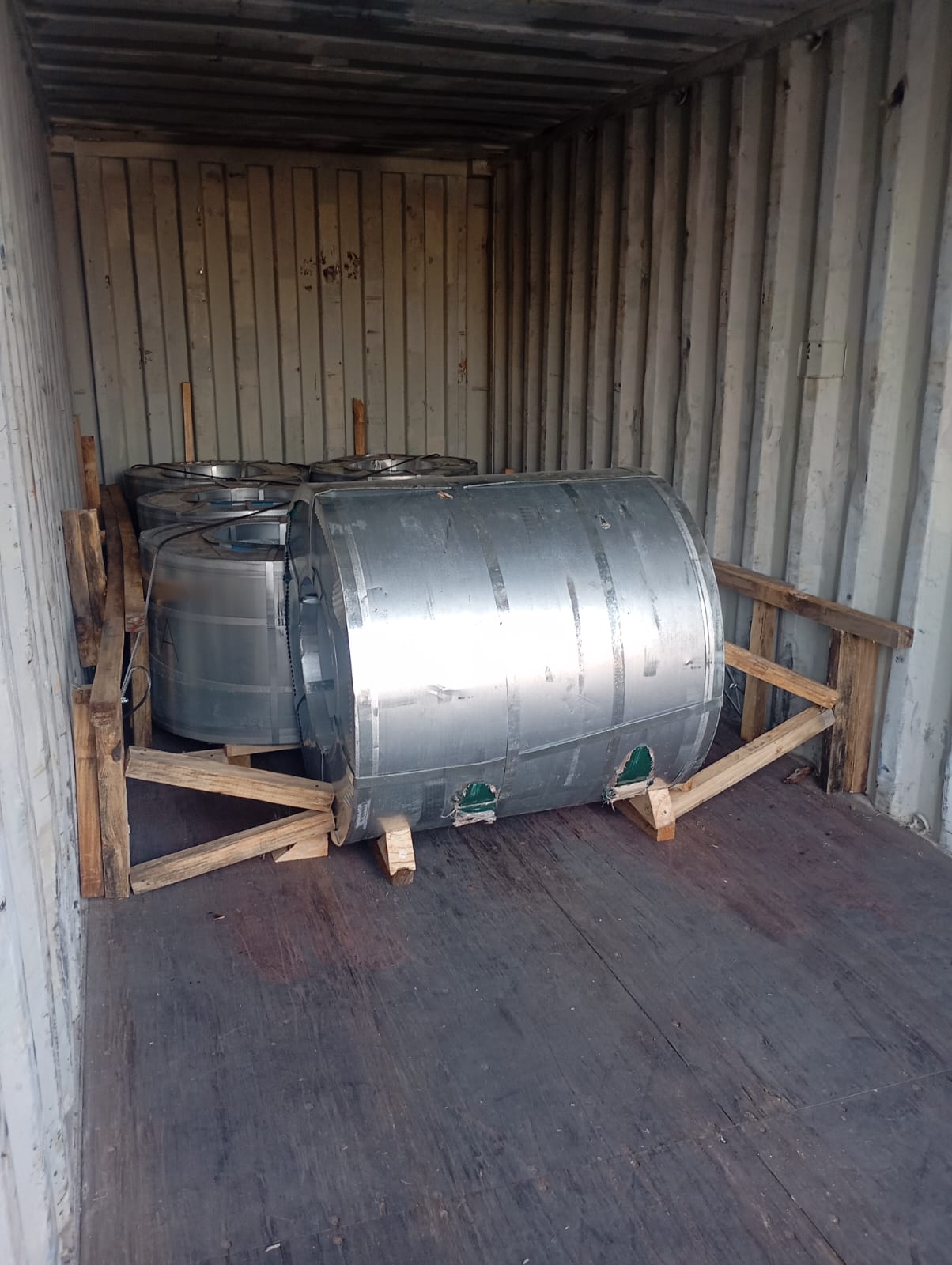
Steel coils cross-stuffing operation between two 20GP containers — Delta Global Cargo, Jebel Ali Port.
Demurrage and Free Time at Jebel Ali
The most common mistake on a Jebel Ali cross stuffing job is underestimating how fast demurrage and detention build up. Most shipping lines give around 5–7 days of free time at the terminal; after that, daily charges apply per container and they rise with container size. We track free time on every inbound container, tell you the day it lands, and plan the cross stuffing inside the free-time window wherever possible.
Why Choose Delta Global Cargo for Cross Stuffing in Dubai?
With offices in Dubai, Hamburg, Bursa, Kabul, Herat and China, Delta Global Cargo handles complex multi-origin consolidations that most freight forwarders cannot coordinate. Cross stuffing is carried out through our partner agents’ licensed bonded warehouses adjacent to Jebel Ali Port, with certified dangerous goods handling, milestone status updates, and full customs brokerage for bonded and JAFZA transit freight.
Related services: Freight Forwarding at Jebel Ali Port | Container Shipping Dubai | Freight Forwarding Dubai
Frequently Asked Questions About Cross Stuffing Dubai
What is the difference between cross stuffing and transshipment?
Transshipment transfers a sealed container from one vessel to another at an intermediate port. Cross stuffing physically unloads the freight from one container and reloads it into a different one. Cross stuffing gives you the flexibility to consolidate, split, or reorganise freight; transshipment does not.
How much does cross stuffing cost in Dubai?
It depends on container size, freight weight and type, and handling requirements; dangerous goods, reefer freight or oversized items cost more to handle. Rates change often, so send us your container details for a current quote.
How long does cross stuffing take at Jebel Ali?
A standard operation takes 24–72 hours from inbound container arrival to sealed outbound unit ready for pickup. Complex operations involving many suppliers or special freight may take 3–5 working days.
Can I cross stuff bonded freight in Dubai without paying import duty?
Yes. Freight processed within JAFZA under an in-transit or re-export customs declaration does not attract UAE import duty or VAT. Delta Global Cargo handles all bonded transit documentation as part of our service.
What container sizes are available for cross stuffing in Dubai?
We work with all standard types and sizes: 20ft dry, 40ft dry, 40ft high cube, 20ft and 40ft reefer, open-top, and flat-rack containers for oversized freight.
Does Delta Global Cargo handle dangerous goods cross stuffing?
Yes. Our team includes certified dangerous goods handlers trained to IMDG standards. We manage segregation, documentation, and special handling for IMO-classified hazardous materials in designated facilities.
Do I need a UAE company to do cross stuffing at Jebel Ali?
No. Delta Global Cargo acts as your appointed agent in the UAE and manages the whole cross stuffing job on your behalf. You do not need a UAE trade licence or company registration; we arrange the customs, bonded warehouse slot (through our partner agents) and transport.
How do I avoid demurrage charges during cross stuffing at Jebel Ali?
Plan early. Share container arrival details with us before the vessel leaves the load port. We track the inbound containers, book the warehouse slot in advance and complete the cross stuffing inside the shipping line’s free time, typically 5–7 days.
Phone / WhatsApp: +971 56 585 1062
Email: info@deltaglobal.ae | morid@deltaglobal.ae
Contact Delta Global Cargo today to arrange cross stuffing Dubai through our partner agents’ licensed bonded facilities at Jebel Ali Port. Our cross stuffing Dubai service covers container destuffing, freight sorting, repackaging and reloading — with a licensed customs team and fast turnaround times to keep your supply chain on schedule.
For bonded warehouse regulations and cross-stuffing procedures under UAE customs law, refer to the Dubai Customs official portal for current guidelines.
Get a Free Freight Quote
Tell us your route and cargo details — our team responds within 2 hours.