FCL vs LCL Shipping: Which Is Right for Your Freight?
Last updated: April 2026
FCL vs LCL shipping is one of the most important decisions you will make as an importer or exporter through Dubai. The right choice depends on your shipment volume, budget and urgency. However, understanding FCL vs LCL shipping in detail before you book can save significant costs — and Delta Global Cargo can advise on the best option for your specific freight.
FCL vs LCL Shipping: The Core Differences Explained
FCL vs LCL Shipping in Dubai: Which Option Is Right for Your Freight?
When shipping freight internationally through Dubai, one of the first decisions you will face is whether to book a Full Container Load (FCL) or Less than Container Load (LCL). This choice directly affects your freight cost, transit time, freight security, and scheduling flexibility — and the right answer depends entirely on your shipment volume, urgency, and budget.
This guide explains exactly how FCL and LCL shipping work at Jebel Ali Port, what each option costs, when to choose one over the other, and how Delta Global Cargo can help you get the best rate for your Dubai shipment.
What Is FCL Shipping?
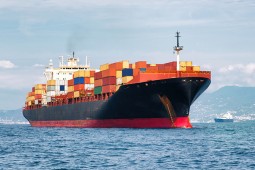
FCL stands for Full Container Load. When you book FCL, you are renting an entire shipping container exclusively for your shipment — whether that container is 20 feet, 40 feet, or 40 feet high cube. The container is loaded at origin, sealed, and delivered to the consignee before being opened. No other shipper’s goods share the container.
Key characteristics of FCL shipping from Dubai:
- You pay a flat rate per container, regardless of whether it is completely full
- Container is sealed at the loading point and opened only at the destination
- Lower handling risk — goods are not repacked or touched in transit
- Faster transit time — the container moves directly without consolidation delays
- Available container sizes from Jebel Ali: 20ft (25 CBM / 22 tonnes payload), 40ft (67 CBM / 26 tonnes payload), 40ft High Cube (76 CBM / 26 tonnes payload)
What Is LCL Shipping?
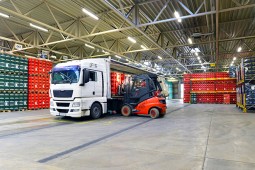
LCL stands for Less than Container Load. When you book LCL, your shipment shares a container with other shippers’ goods headed for the same destination port. You pay only for the cubic metres (CBM) or weight your shipment occupies — whichever is greater by the carrier’s calculation. The freight is consolidated (grouped together) at a Container Freight Station (CFS) in Dubai before being loaded onto the vessel.
Key characteristics of LCL shipping from Dubai:
- You pay per CBM or per tonne — typically whichever is higher (W/M ratio)
- Your shipment is handled more frequently — packed in, then unpacked at the destination CFS
- Transit time is longer due to consolidation and deconsolidation delays at each end
- Cost-effective for small shipments under 10–12 CBM
- More flexible scheduling — LCL departures from Jebel Ali are typically available weekly on major trade lanes
FCL vs LCL: Side-by-Side Comparison
| Factor | FCL | LCL |
|---|---|---|
| Minimum shipment size | No minimum — you pay for the full container regardless | No minimum — you pay for space used |
| Best volume range | Above 12–15 CBM | Under 10–12 CBM |
| Cost structure | Fixed rate per container | Rate per CBM or tonne (W/M) |
| Transit time | Faster — no consolidation delays | Slower — CFS handling at both ends adds 3–7 days |
| Freight security | Higher — sealed, not repacked | Lower — freight is handled multiple times |
| Scheduling | Book your own vessel departure | Weekly departures on main trade lanes |
| Suitable for fragile goods | Yes — minimal handling | Risky — additional handling at CFS |
| Suitable for hazardous goods | Yes — with proper declaration | Restrictions apply — some DG classes not accepted LCL |
When to Choose FCL Shipping from Dubai
FCL makes financial sense when your shipment volume is above approximately 12–15 CBM, or roughly half a 20ft container. At this volume, the per-CBM cost of FCL equals or beats LCL rates — and you gain the additional benefits of faster transit and lower freight damage risk.
It is also useful for new importers testing a supplier relationship before committing to full-container order quantities.
Choose LCL when:
- Your shipment volume is under 10–12 CBM
- You are shipping samples, trial orders, or small top-up stock
- Cash flow requires you to order in smaller quantities more frequently
- You need flexibility to ship from multiple suppliers without waiting to fill a container
- The destination port has weekly LCL departures from Jebel Ali (most major trade lanes do)
FCL and LCL Freight Rates from Dubai: What to Expect in 2026
Freight rates from Jebel Ali fluctuate based on trade lane, carrier, season, and global supply-demand conditions. As a general guide for 2026:
- FCL 20ft from Jebel Ali to East Africa (e.g. Mombasa): USD 900–1,400 per container
- FCL 40ft from Jebel Ali to East Africa: USD 1,200–1,900 per container
- FCL 20ft from Jebel Ali to UK/Europe: USD 1,800–2,800 per container
- FCL 20ft from Jebel Ali to India: USD 400–700 per container
- LCL from Jebel Ali (all destinations): USD 25–65 per CBM depending on destination and carrier
These are indicative freight rates only. Port charges, origin handling, documentation fees, and destination charges are additional. Contact Delta Global Cargo for a full, all-in quotation for your specific freight.
The Role of Cross Stuffing in FCL vs LCL Decisions
If you are importing from multiple suppliers — some sending FCL volumes and others sending smaller LCL quantities — cross stuffing at Jebel Ali can be a powerful alternative to booking separate FCL and LCL shipments. We consolidate all your suppliers’ freight into a single outbound container at our Jebel Ali warehouse, giving you the cost efficiency of a shared LCL service with the security and speed of a sealed FCL container for the main voyage.
This is particularly valuable for traders importing from China or India with multiple suppliers, then re-exporting to Africa or Afghanistan. See our cross stuffing Dubai guide for details.
LCL Consolidation Service from Dubai: How It Works
Delta Global Cargo operates a weekly LCL consolidation service from Dubai (Jebel Ali) to major destinations. Here is the process for your LCL shipment:
- You book your shipment with us, confirming volume, weight, commodity, and destination
- Your shipment is delivered to our Jebel Ali CFS facility (or we arrange collection from your supplier)
- We inspect, tally, and stuff your shipment alongside other shippers’ consignments headed to the same destination
- The consolidated container is booked on the next available vessel departure
- At destination, the container is unstuffed at the destination CFS and your shipment is released to you or your agent
Related services: Container Shipping Dubai | Cross Stuffing Dubai | Customs Clearance Dubai | Freight Forwarding Dubai
Frequently Asked Questions: FCL vs LCL Shipping Dubai
At what volume does FCL become cheaper than LCL from Dubai?
The breakeven point where FCL becomes cheaper than LCL is typically around 12–15 CBM for most trade lanes from Jebel Ali. Below 10 CBM, LCL is almost always cheaper. Above 15 CBM, FCL is almost always more cost-effective. Between 10–15 CBM, it depends on the specific trade lane and current market rates — request both options from Delta Global Cargo and compare.
How long does LCL shipping from Jebel Ali take compared to FCL?
LCL shipments typically take 3–7 days longer than FCL on the same trade lane due to consolidation at the origin CFS and deconsolidation at the destination CFS. For example, an FCL from Jebel Ali to Mombasa takes approximately 10–12 days; an LCL on the same lane takes 14–18 days including CFS handling at both ends.
Can I ship dangerous goods (DG) as LCL from Dubai?
Some dangerous goods classes are accepted in LCL consolidations, subject to compatibility checks with other freight in the container. However, many DG classes — particularly flammable liquids, explosives, and toxics — cannot be co-loaded with general goods and must ship as FCL. Delta Global Cargo advises on DG shipping options for your specific commodity and IMDG classification.
What is the minimum LCL shipment size from Jebel Ali?
Most LCL carriers from Jebel Ali accept a minimum of 1 CBM or 100 kg. However, very small shipments under 2–3 CBM may attract a minimum B/L fee that makes the effective per-CBM rate significantly higher. For very small shipments (under 2 CBM), air freight or courier may be more cost-effective.
Does my freight need to be palletised for LCL shipping from Dubai?
Palletisation is strongly recommended for LCL shipments to minimise handling damage during consolidation and deconsolidation. Some CFS facilities require palletised goods for handling efficiency. Delta Global Cargo’s warehouse team can arrange palletising and shrink-wrapping at our Jebel Ali facility if your shipment arrives loose.
How do I get an FCL or LCL quote from Delta Global Cargo?
Contact us via phone, WhatsApp, or email with: freight origin and destination, volume and weight, commodity description, and required delivery date. We respond to all freight quote requests within 2 working hours during business hours (Monday–Saturday, 9am–6pm Dubai time).
Phone / WhatsApp: +971 56 585 1062
Email: info@deltaglobal.ae | morid@deltaglobal.ae
Still unsure about FCL vs LCL shipping for your next freight movement? Contact Delta Global Cargo — our team will assess your shipment dimensions, weight and destination to recommend the most cost-effective option. Whether FCL vs LCL shipping is the right fit, we handle both with weekly services from Jebel Ali to every major global port.
For authoritative definitions of international trade terms used alongside container booking decisions, refer to the ICC Incoterms official rules.