Customs Clearance Dubai: A Complete Guide for Importers and Exporters
For any business involved in international trade through Dubai, customs clearance is one of the most critical — and most misunderstood — parts of the logistics process. Delays at customs can hold cargo for days or even weeks, creating costly disruptions to supply chains and delivery schedules.
In addition, At Delta Global Cargo LLC, we provide professional customs clearance Dubai services for importers and exporters of all sizes. Our experienced customs team manages all documentation, compliance requirements, and port procedures so your cargo moves through Dubai Customs quickly and without unnecessary complications.
What Is Customs Clearance?
As a result, Customs clearance is the official process of declaring goods to a country’s customs authority, paying any applicable duties and taxes, and obtaining permission for the cargo to enter or leave the country. Every international shipment must go through customs clearance — without it, cargo cannot legally be released from the port or airport.
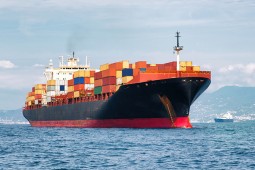
In Dubai, customs clearance is managed by Dubai Customs, which operates at Jebel Ali Port, Port Rashid, Dubai International Airport, and other entry points. The process involves submitting the correct documentation, ensuring the goods comply with UAE import regulations, calculating and paying duties where applicable, and obtaining a release order that allows the cargo to be collected.
Key Documents Required for Customs Clearance in Dubai
- Commercial invoice — showing the value, quantity, and description of the goods
- Bill of lading or airway bill — the main transport document issued by the shipping line or airline
- Packing list — detailing the contents, weight, and dimensions of each package
- Certificate of origin — confirming where the goods were manufactured
- Import permit — required for certain regulated goods such as food products, medicines, and chemicals
- Letter of credit or payment documentation — where required by the bank
Import Duties and Taxes in the UAE
The UAE applies a standard customs duty rate of 5% on most imported goods, calculated on the CIF value (cost, insurance, and freight). Some goods are exempt from duty, while others — such as alcohol and tobacco — attract higher rates. Goods entering the UAE through the Jebel Ali Free Zone (JAFZA) for re-export are not subject to import duties, making Dubai a cost-effective transit hub for international trade.
For example, VAT of 5% is applied to most goods imported into the UAE. Our customs team calculates all applicable duties and taxes upfront so there are no surprise costs when your cargo arrives.
Customs Clearance for Dubai Free Zones
Furthermore, Dubai is home to more than 30 free zones, including Jebel Ali Free Zone (JAFZA), Dubai Airport Free Zone (DAFZA), and Dubai Multi Commodities Centre (DMCC). Goods imported into these free zones follow a different customs process than mainland UAE imports — they are generally not subject to standard UAE customs duties, making them attractive for re-export, distribution, and manufacturing businesses.
However, when goods move from a free zone to the UAE mainland, they are treated as a new import and full customs duties apply. Delta Global Cargo has extensive experience managing customs clearance for both free zone and mainland imports, ensuring clients take full advantage of available duty structures while remaining compliant with Dubai Customs regulations.
Common Causes of Customs Delays in Dubai
- Incorrect or incomplete documentation
- Mismatch between invoice values and actual cargo
- Missing permits for regulated product categories
- Incorrect tariff classification of goods
- Physical inspection selected by Dubai Customs
Our team reviews all documentation before submission to identify and resolve potential issues in advance — minimising the risk of holds and delays.
Our Customs Clearance Services in Dubai
Importantly, Delta Global Cargo provides comprehensive customs clearance services covering both imports and exports through all major UAE ports and entry points. We handle documentation preparation and review, tariff classification and duty calculation, submission of customs declarations through Dubai Trade and other official portals, coordination with Dubai Customs for inspection and release, payment of duties and taxes on behalf of clients, and post-clearance documentation and compliance records.
We manage customs clearance at Jebel Ali Port, Port Khalid in Sharjah, and Dubai International Airport — covering all the entry points most commonly used by our clients.
Customs Clearance for Re-Export Through Dubai
Dubai’s position as a global re-export hub means that a significant proportion of cargo arriving at Jebel Ali Port is not destined for the UAE itself but for onward shipment to markets in Africa, Central Asia, or the wider Middle East. Goods transiting through the Jebel Ali Free Zone can be re-exported without paying UAE import duties, provided the correct documentation and procedures are followed.
In most cases, Our team manages the full re-export customs process — from arrival documentation through to re-export declaration and cargo release for the outbound leg.
HS Codes and Commodity Classification in UAE Customs
To achieve this, Every shipment entering or leaving Dubai must be classified under the correct Harmonised System (HS) code — a globally standardised six-digit commodity code that determines the applicable duty rate, VAT treatment, and any special permits required. Incorrect HS code declarations are one of the most common causes of customs delays and can result in penalties or cargo holds.
Delta Global Cargo’s customs team verifies HS code classifications for all shipments before submission. For complex or ambiguous commodities — such as machinery with multiple components, chemical compounds, or finished goods with dual-use potential — we work with clients to confirm the correct classification and, where needed, apply for advance rulings from UAE Federal Customs Authority to eliminate uncertainty before cargo arrives.
Accurate commodity classification is particularly important for goods subject to excise duty, controlled substance regulations, or Ministry of Health and Prevention (MOHAP) approvals. Our team stays current with UAE customs tariff updates to ensure your declarations are always correct and compliant.
VAT on Imports in the UAE
In particular, Since the introduction of Value Added Tax (VAT) in the UAE in January 2018, imports are generally subject to 5% VAT at the point of customs clearance. This applies to goods imported into the UAE mainland regardless of origin. For VAT-registered businesses, the import VAT paid is typically recoverable through the regular VAT return process filed with the Federal Tax Authority (FTA), meaning the actual cost impact for registered companies is neutral.
This means that Non-registered importers, individuals, and certain exempt businesses must pay the VAT without recovery, making it a real cost of importation. Delta Global Cargo advises clients on VAT implications as part of our customs clearance service, including the documentation required to support VAT recovery claims and the correct treatment of goods that may qualify for zero-rating or exemption under UAE VAT law.
Request a Customs Clearance Quote
Contact Delta Global Cargo LLC today for a free consultation on customs clearance for your next shipment through Dubai.
Phone / WhatsApp: +971 56 585 1062
Email: info@deltaglobal.ae | morid@deltaglobal.ae